Queue Management System in Karachi: The 2026 Buyer Guide
Karachi moves fast, and its service counters feel the pressure every single day. A dependable queue management system in Karachi keeps banks, hospitals, and telecom stores orderly even when footfall surges in the afternoon heat. This 2026 buyer guide walks you through what to look for, how local conditions shape the right choice, and the questions that separate a lasting investment from an expensive mistake.
Having set up flow systems across high-traffic sites in the city, we have learned which features survive real Karachi conditions — and which sales-brochure promises quietly fail.
Why Karachi needs purpose-built queuing
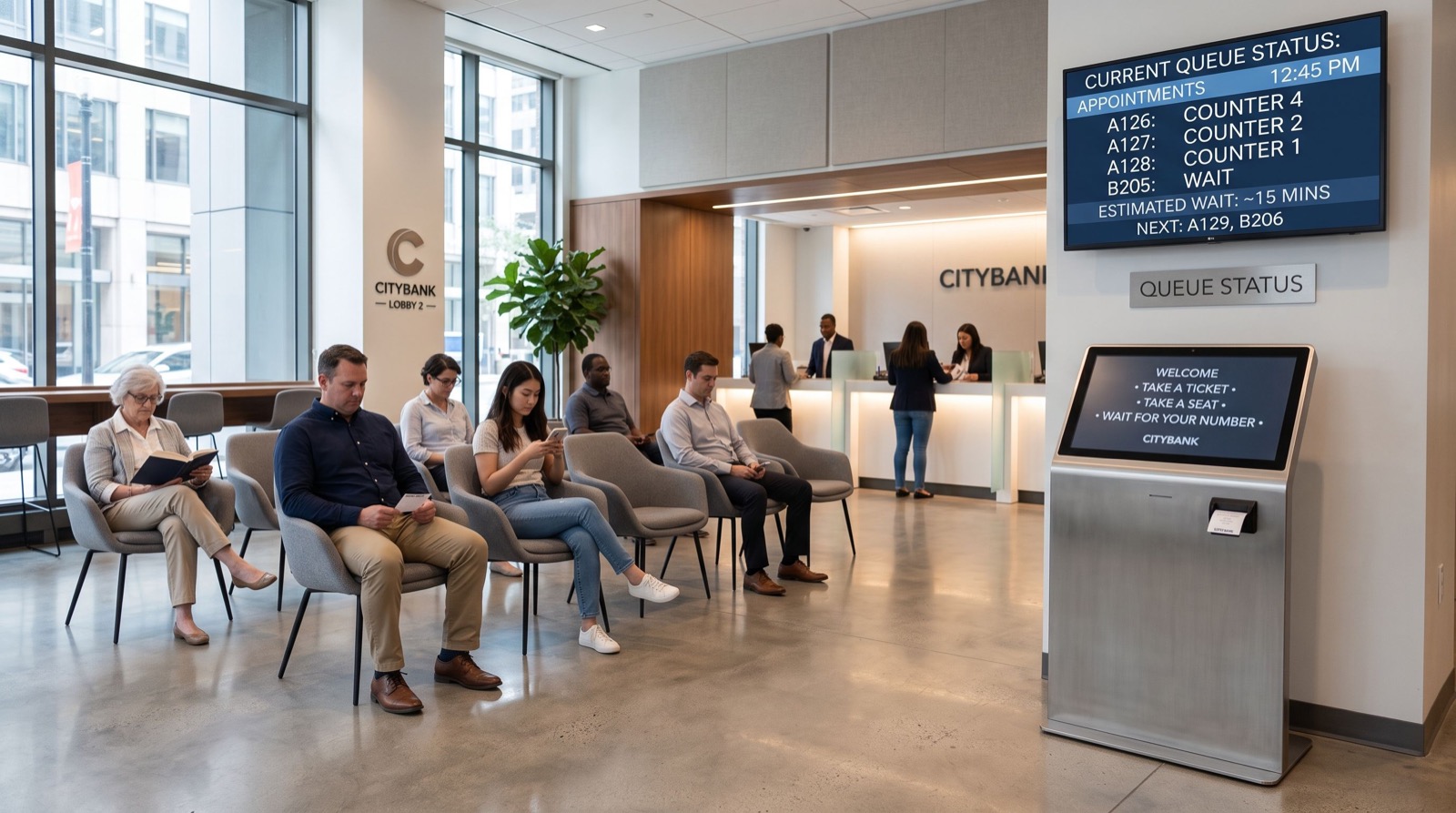
With a population in the tens of millions, Karachi’s service branches handle some of the highest daily volumes in the region. Peak-hour crowds at a bank or a NADRA-style service center can overwhelm any first-come system. A digital queue restores order, assigns fair tickets, and gives managers a live view of pressure points.
Local realities matter too. Frequent load-shedding means your system should ride through power cuts on a UPS and resync cleanly. Humidity and dust demand rugged kiosks. These are not optional extras in this city — they are survival requirements.
That is why a purpose-built queue management system in karachi is worth more than a generic import. A platform tuned for local power conditions, bilingual service, and heavy footfall will outlast a cheaper box that was never designed for this environment.
Sectors seeing the biggest gains
- Banking: teller and advisory routing during salary-day rushes.
- Healthcare: OPD and pharmacy flow in crowded hospitals.
- Telecom: SIM, billing, and device-support lanes in flagship stores.
- Government: document and certificate counters with priority lanes.
Banks in particular face rising service expectations. The State Bank of Pakistan continues to push customer-centric and digital-first standards across the sector, and a measurable queue is one of the simplest ways branches can demonstrate progress.
Core features of a strong queue management system in Karachi
Do not get dazzled by screens and sounds. The value lives in routing logic and reporting. Here is what truly counts.
- Smart routing that sends each visitor to the fastest qualified counter.
- Bilingual Urdu-English tickets, displays, and announcements.
- SMS and mobile check-in so customers wait comfortably, not in a crush.
- Power-resilient hardware with UPS backup and auto-reconnect.
- Granular analytics by service, agent, hour, and branch.
Many organizations that start in Karachi later expand to the Gulf, where the same core platform powers a large-scale queue management system in saudi arabia. Choosing a vendor who already supports both markets saves painful migration costs down the line.
Cost and configuration by branch size
Pricing in Pakistan scales with hardware count and software licensing. Use the table below to scope your branch before requesting quotes, so you compare like with like.
| Branch size | Counters | Recommended setup | Priority features |
|---|---|---|---|
| Small | 1–3 | Single kiosk + one display | Urdu-English, UPS backup |
| Medium | 4–8 | Kiosk + SMS + routing engine | Priority lanes, analytics |
| Large | 9–15 | Multi-channel + central dashboard | CRM link, agent scoring |
| Enterprise | 16+ / multi-site | Full platform + mobile app | Cross-branch reporting |
Local service and support
In a city where traffic can turn a quick fix into a half-day trip, local support is everything. Prioritize vendors with on-ground engineers, a spare-parts stock in Karachi, and a clear response-time commitment. A dashboard is useless if a dead kiosk sits unrepaired for a week during salary-day rush.
When you shortlist, insist on references from similar quality service providers already running the platform in Pakistan, and call those references directly. Real customers reveal more in five minutes than any sales deck.
Planning your rollout
Smart deployment avoids disruption. Karachi’s population scale, reflected in data from the Pakistan Bureau of Statistics, means even a single busy branch can process thousands of visitors a day — so pilot carefully before scaling.
A practical tip from our installs: schedule your go-live for a Monday after a low-traffic weekend, not before a salary-day peak. Let staff build confidence on a normal day, then let the system prove itself when the real rush hits. Capture a baseline the week before so your improvement numbers are honest and defensible.
Integration with your existing systems
A queue platform delivers the most value when it talks to the software you already run. In a Karachi bank, that means linking tickets to the core banking system so a returning customer is recognized and routed to the right advisor. In a hospital, it means connecting to the patient records system so the OPD queue reflects real appointments.
Good integration also unlocks customer messaging. When the platform knows a visitor’s mobile number, it can send an SMS as their turn approaches, freeing them to run an errand instead of standing in a hot hall. These small conveniences drive the satisfaction scores that increasingly shape online reputation in a competitive city.
Security and data handling
Any system that touches customer identity must handle data responsibly. Ask vendors how ticket data is stored, who can access the dashboard, and whether reports can be exported securely for audit. Role-based access keeps sensitive analytics with managers while front-line staff see only what they need.
Training your team for success
Technology rarely fails on its own — adoption does. Invest a half-day in training front-desk staff before go-live. Cover ticket issuing, escalation rules, and how to read the live board. When staff understand that the system makes their day calmer rather than watching over them, they embrace it quickly.
Appoint one branch champion who owns the weekly report review. That single habit — someone actually looking at the numbers and acting on them — is what separates branches that improve month after month from those that let an expensive system gather dust.
Frequently Asked Questions
How much does a queue management system in Karachi cost?
Costs depend on counter count, hardware, and licensing. A small single-kiosk branch is modest, while enterprise multi-site deployments scale accordingly. Always request a per-branch quote based on your real daily visitor volume.
Will it keep working during load-shedding?
A properly specified system runs on UPS backup and reconnects automatically when power returns. Confirm this resilience in writing before you buy, because Karachi’s power cuts will test it.
Does it support Urdu and English?
Yes. Any platform built for the Pakistani market should offer full bilingual ticketing, displays, and voice announcements so every visitor is served clearly.
Can I start with one branch and expand later?
Definitely. The recommended path is a single-branch pilot with a measured baseline, then a phased rollout across your network once the gains are proven.
Conclusion
The right queue management system in Karachi turns a chaotic, sweltering waiting hall into a calm, measurable, and improvable operation in 2026. Specify power-resilient hardware, insist on local support, pilot before you scale, and choose a partner who can grow with you across the region. Start by mapping your busiest branch this week — then request a tailored demo and see the difference for yourself.